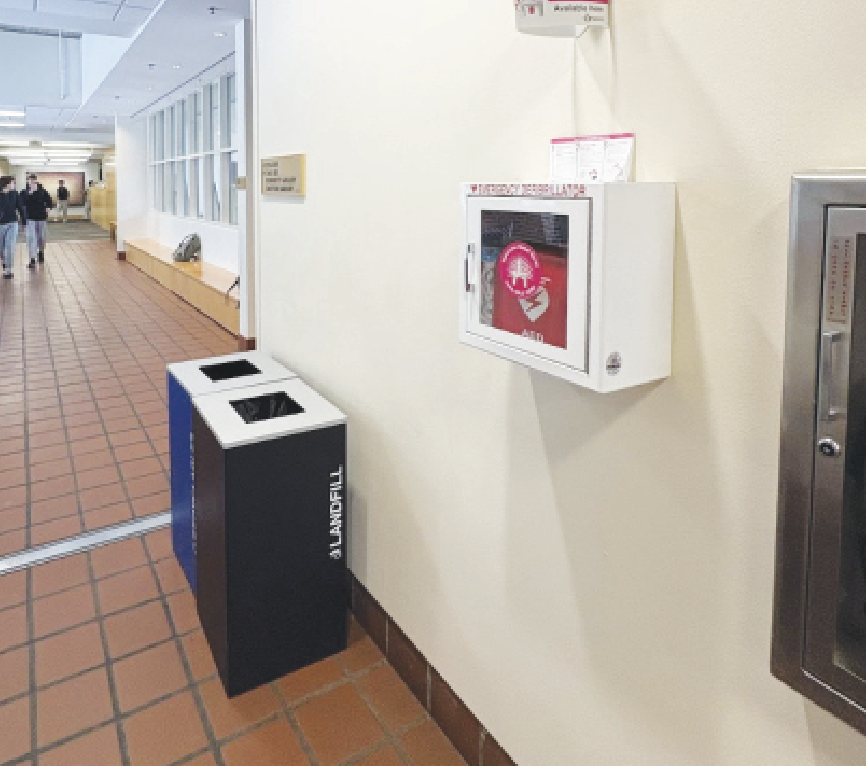
For many students walking through the school’s hallways, the contents of the Automated External Defibrillator (AED) cabinet fade into the background. Inside those cases is Narcan, a medication designed to reverse opioid overdoses, and a permanent part of campus safety. It can be found wherever AED cabinets are located. “Anyone who has an emergency has access to it,” said Rio Hansen, Lead Security Officer. “It is not locked up. It is not hidden. There are even signs above the cabinets noting its location.” Narcan is no ordinary nasal spray. The medication rapidly reverses opioid overdoses by blocking the effects of opioids such as heroin, fentanyl, and prescription painkillers.
Despite its visibility and accessibility, many students remain unaware that Narcan has been available across all campuses since the summer of 2023. The decision to add Narcan campus-wide followed more than a year and a half of discussion and planning. Hansen, Gene Paulauskas, Head of Security, and School Nurse Louisa Jaehn led the effort to secure approval, supply, and training for staff. According to Hansen, the decision was not prompted by a specific incident or trend. “I felt it would be a good choice to have it on hand, especially because we are next to Minneapolis and we are an Upper School community,” Hanson said. “We’re not ignorant of the fact that opioid overdoses happen. We just want to be prepared and keep everyone safe.”
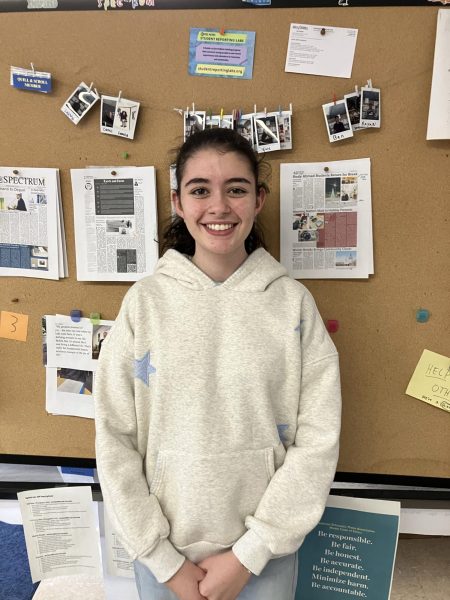
While administrators and staff emphasize preparedness, the presence of Narcan has largely gone unnoticed among students. For many, its addition feels like another quiet safety measure folded into the school’s infrastructure. Carly Bass ‘29 said her initial reaction to seeing Narcan in the hallways was largely positive. “I thought it was a good thing,” she saidys. “[It] was a good addition to the hallways.” Despite recognizing its value, Bass said Narcan’s presence did not significantly affect how safe she felt at school. “I never really thought about it. I’d probably say I feel mostly unaffected–but it’s good that it’s there.” She noted that having Narcan available did not change how she viewed substance use among students. Aanika Gadia ‘28, however, said the implementation of Narcan did slightly change how she thinks about substance use at Blake. “It makes me think it’s a little more common than they might try to make it seem,” she said.
“Its [substance use] is definitely hidden,” Gadia said. “It’s not very open.” She added that discussions surrounding addiction or overdose can feel uncomfortable, even in health classes. Despite discomfort, Gadia emphasized that Narcan’s presence sends the right message. “I definitely think it’s necessary,” Gadia said, “It’s better to have it than not have it. You never know when something could happen.”