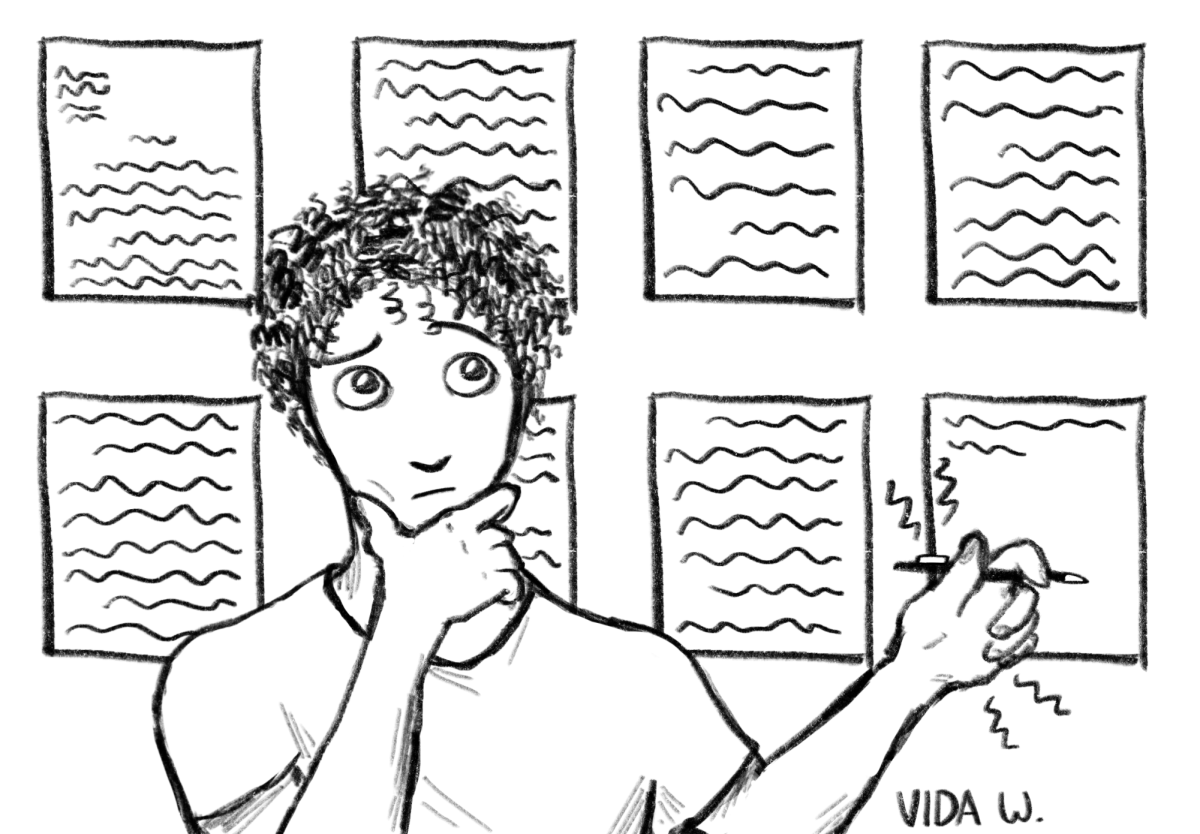
![Graphic Artist Wolstencroft shared about her process making this graphic: “I used an app called Procreate. The first thing I did was manually remove the background from all of the [movie] posters [featured in this article]. Then I decided which color scheme I liked best...and I used gradient maps to get the colors to be uniform. I [also] added some extra shading and a background, and it was done.”](https://www.blakespectrum.org/wp-content/uploads/2026/05/0-1200x834.png)
Film Society co-leader Nick Gadjusek ‘26 claimed, “You can’t judge [movies] because they’re making references to things that don’t relate to the way we live now. We should live and watch with a different eye’s perspective.” Gadjusek added, “The correct way to look [at movies] is to completely understand what they’re trying to do. You have to know how people react the way they do.”
Film is meant to reflect all different kinds of emotion. It should reflect fears, prejudices, mysteries and the ambitions of the time. Looking back at films isn’t meant to be comfortable, but instead it is meant to understand their historical context and intent. Banning films is a very complicated topic.
Releasing unopinionated films deters the importance of film, and prevents any significant cultural impact or emotional lesson to be drawn from the film, which completely opposes the point.
As society evolves, the ideas change of what we should view as acceptable. Gadjusek explained, “[Cancel culture] is just a cultural preference [and it’s] very problematic. The point is to be uncomfortable.” Art is not what the artist puts into it but how people react to it.” Films shouldn’t be banned for their views on significant events of the time because they reflect the values and flaws of their time.
Indiana Jones and the Temple of Doom (1984)
Despite being a huge blockbuster, this film would face strong criticism and backlash today. The film leans very heavily into exoticism, portraying the locals of the movie as bizarre and superstitious. There are lots of infamous scenes with food and rituals.
Modern cultures are a lot more attuned to representation and stereotypes, and the film would likely be accused of reinforcing colonialist perspectives. The idea of a Western Hero vs others would require major changes to be more respectful for all of the social perspectives.
The Wolf of Wall Street (2013)
This film is much more recent, but has received major criticism. The film portrays extreme wealth, drug use, corruption, and misogyny. Despite its possible objectives, it is often interpreted as glorification.
Audiences today would not be as willing to separate satire from celebration. The ambiguity of the film leads to heated debates, and would likely face significant backlash or require changes before being produced today.
The Hangover (2009)
This was one of the biggest comedy-hits in the 2000s; however, the film would receive a lot of criticism today for the heavy and offensive humor that it contains. There are frequent slurs even used by minor characters, and the film’s core idea of no memory and accountability directly clashes with today’s push for responsibility and consent.
Mrs. Doubtfire (1993)
This movie is so beloved and cherished by many. However, the film uses humor in a way that today could be interpreted as mocking gender expression. Despite the main character’s motivations being sympathetic and harmless, many of the jokes throughout the film rely on discomfort and deception tied to identity.
——————
How should we decide what crosses the line? We need to think about how we examine films critically and thoughtfully. Acknowledging the difference of perceptions over time, we can truly judge if a film is truly too difficult to show today.