Religious pluralism is foundational to an inclusive community and also a core principle of the Upper School’s values. However, when a group of juniors was asked to perform another song instead of Wham!’s holiday hit “Last Christmas” at the variety show, idyllic inclusive pluralism at the Upper School became a little blurry.
For the annual Thanksgiving talent show, a group of juniors decided that a fun school sing-along would be a great addition. Michelle Pham ‘27, a member of the group, shared, “It was just going to be vibes.”
However, after communicating with SIAC, Upper School Assistant Director Sarah Warren decided that the group would have to lead an alternative song. Warren explained, “We’ve tried to have a more holiday-neutral approach rather than promoting Christmas,” continuing that “I was totally on board with a sing-along, but we do really want it to be holiday-neutral instead of being overly Christmas or even overly Hanukkah.”
However, some students in the group and outside didn’t seem to have the same perspective. Group member, Hannah Bubb ‘27 shared, “We’ve had senior speeches about religion, and ‘Last Christmas’ isn’t hyper-religious.” Pham echoed, “Although it is a Christmas song, we didn’t think that it had that many religious connotations to it.” Pham even pointed out that within their group, “most of us aren’t religious or we actually identify with a different religion.”
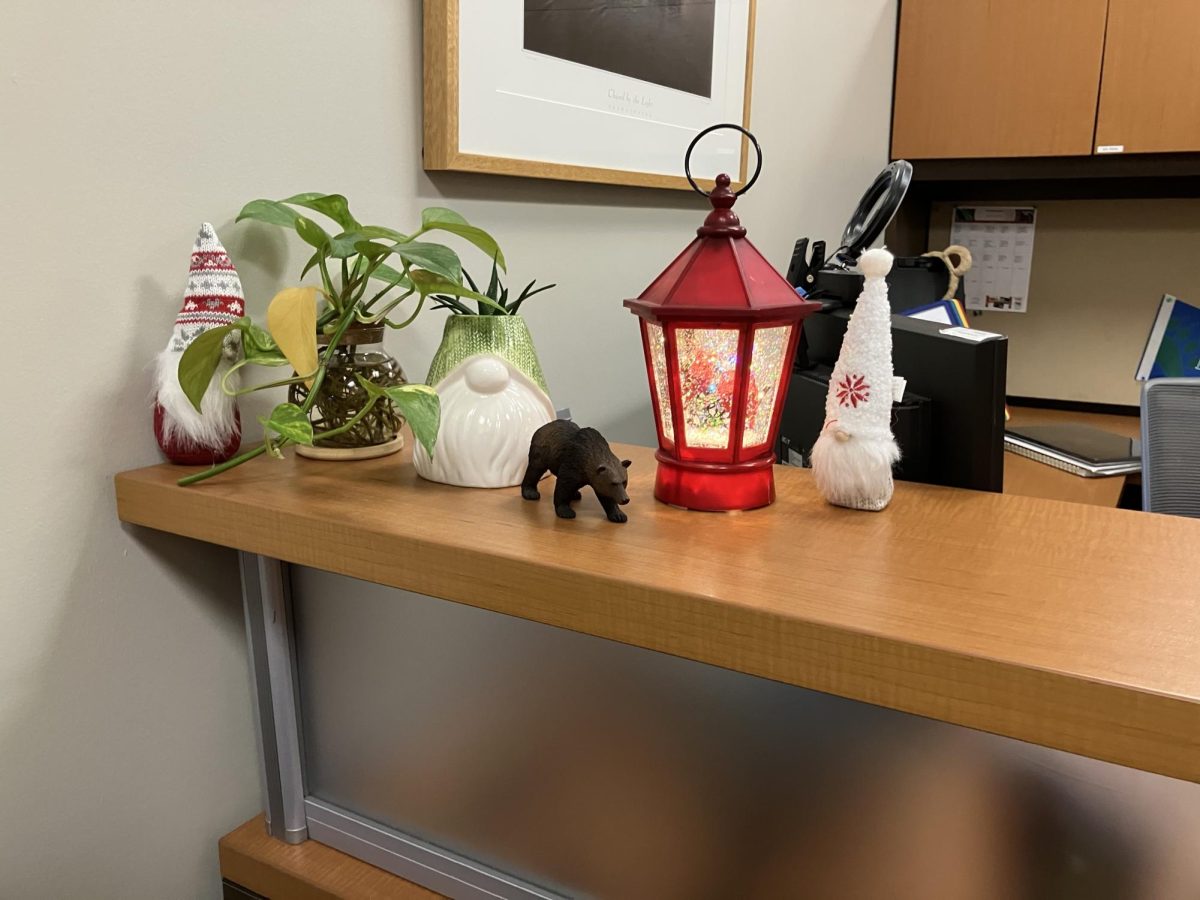
While the decision made sense to some degree, it shines a light on the inconsistency of how a “holiday-neutral approach” is applied. For instance, within the last month, the library was decorated with Hanukkah decorations on tables and decorations strung across walls. There isn’t anything wrong with Hanukkah decorations; in fact, it seems like a great way to support religious pluralism and inclusivity. However, it seems ironic that religious decorations are allowed to hang for an entire month for one religion, while a relatively non-religious performance of another is met with restrictions.
While the group was given opportunities to find an alternate song, the student group declined. Even with miscommunication or lack of communication, the justification behind what religious displays are acceptable is unclear at best. As religious pluralism has become a massive talking point not only in the school community but also at a national level, this moment begs the question: Is pluralism really pluralistic when it’s selective?

![Graphic Artist Wolstencroft shared about her process making this graphic: “I used an app called Procreate. The first thing I did was manually remove the background from all of the [movie] posters [featured in this article]. Then I decided which color scheme I liked best...and I used gradient maps to get the colors to be uniform. I [also] added some extra shading and a background, and it was done.”](https://www.blakespectrum.org/wp-content/uploads/2026/05/0-1200x834.png)