Teen friendships are under fire from politics in ways older generations never faced. Teens are growing up in a world where social media and news outlets exaggerate every disagreement, and a single repost can make a friend feel like an enemy. Students often judge peers based on political alignment, assuming that anyone with opposing views has fundamentally different, and therefore incorrect, values and morals. More often than not, this can turn casual conversations into social divisions, making it harder to connect with people who think differently. In a 2024 study conducted by Her Campus, Gen Zers were asked to weigh in on their political beliefs, voting habits, and the impact politics have on their ability to form and sustain friendships. The results are disheartening: 42% of respondents said that they were at least “somewhat likely” to end a friendship over conflicting political views.
Friendships built on trust, respect, and communication can endure political disagreements only if both sides are willing to listen. Extreme or harmful beliefs may warrant distance, but most disagreements are far less serious than students treat them. High school is one of the first places many teens confront ideas that challenge their worldview, and learning to separate opinions from personal judgment is crucial to seeing people’s politics as reflective values, not worth.
True friends aren’t clones of you. They are people who challenge, question, and push you to think harder about what you truly believe in. It’s uncomfortable, messy, but necessary. If you can’t handle that, not only are you losing friends, you’re missing the entire point of growing as a politically educated and reasonably grounded person. Stop letting politics decide who you talk to. Real friends argue, question, and challenge each other while remaining loyal and open-minded.
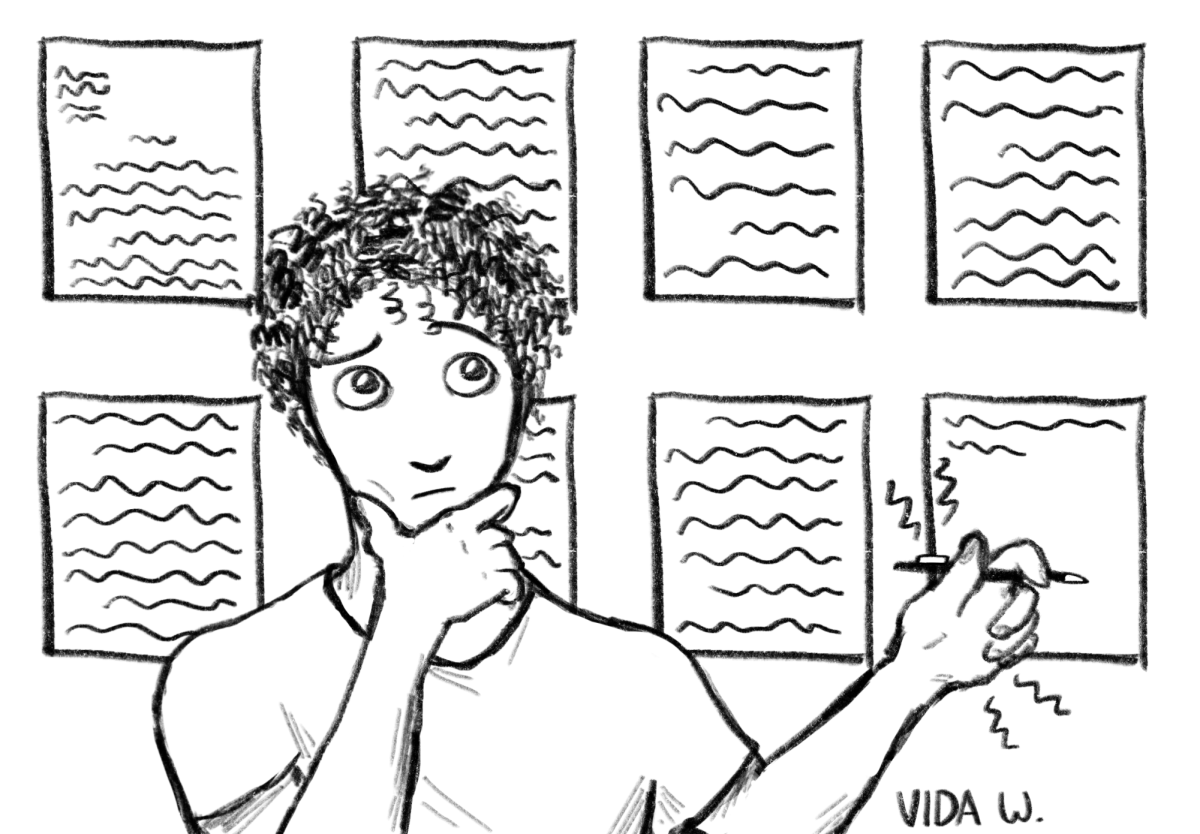
![Graphic Artist Wolstencroft shared about her process making this graphic: “I used an app called Procreate. The first thing I did was manually remove the background from all of the [movie] posters [featured in this article]. Then I decided which color scheme I liked best...and I used gradient maps to get the colors to be uniform. I [also] added some extra shading and a background, and it was done.”](https://www.blakespectrum.org/wp-content/uploads/2026/05/0-1200x834.png)