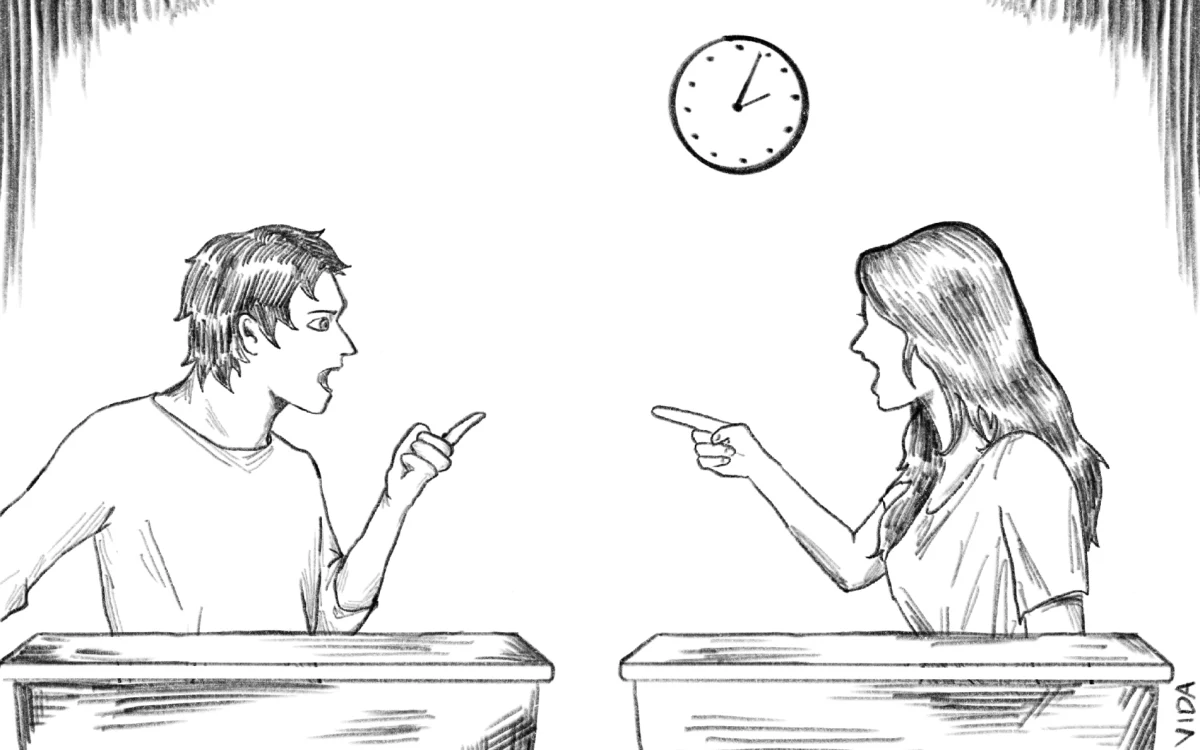
As the school year closes, huge deadlines and assessments loom over the student body. For community members navigating anything from school to family life, mental health resources are essential. So while finals week exacerbates stress and anxiety for many, there are many resources to help support students through the end of the year.
A vital aspect of the Upper School is the Counseling Office. Director of Counseling Erin Adams and Counselor Jill Rabinovitz are two members of the community who offer support to students who seek it. “Our counselors are the biggest resource,” stated Health teacher Cris Larson. “They have a lot of resources they can connect students to.” While one can shoot them an email or stop by their office to schedule a meeting, they have also curated a resource page for students who don’t necessarily wish to meet one-on-one with these counselors. This page can be accessed through Veracross by using the Upper School Link. It includes general resources, such as articles, apps, and crisis resources for more urgent situations.
For sophomores in Health, there are additional resources on Larson’s Canvas page under the Modules section regarding mental health. Inside the Health room, resources such as flyers and QR codes are scattered on the walls and tables, particularly by the door. Informational flyers can also be found in the bathrooms around the Upper School that include similar QR codes to resources that are easily accessible to students.
It’s important to note that there are resources available outside of our community as well. Hotlines such as the 988 Suicide & Crisis Lifeline, The Trevor Project, and Teen Line, among others, offer timely or instantaneous help to those who are struggling via phone or text. These services are equipped with trained counselors equipped to provide emotional support to those who need it. Furthermore, seeking help from doctors and/or mental health professionals can be essential in diagnosing or getting treatment for more severe, long-term mental illnesses. A potential first step in receiving this help could be confiding in a trusted adult or parent. Larson said because “it’s very common for people to have a hard time taking that first step,” she encourages “people who know of people who are struggling and maybe want to seek help but don’t know how to provide support by going with their friend to talk to somebody.”
Many students may opt to invest in longer-term treatment options, like therapy. Therapy can look different for everyone, with many organizations, like Telehealth, offering virtual for those with busy schedules. Other forms of therapy include cognitive behavioral therapy and group therapy. The American Psychiatry Association found that around 75% of people who used psychotherapy, a common treatment for mental health issues, benefitted from it. Reaching out for help when you need it, even when it may be hard, can be beneficial in the short and long term. It can reduce mental health stigma, improve well-being, and save lives.
In addition to formal resources, fostering a culture of openness surrounding mental health will allow students to support each other. Checking in on friends and engaging in conversations surrounding mental health will help create a more inclusive community and encourage students to shape the environment they want to be surrounded by.
While there are many readily available resources for members of our community, many services are being endangered by the federal government across different regions. The Trump Administration has threatened to cut access and funding to many organizations that support mental health in students. They have stated that they desire to stop over a billion dollars worth of funding in federal grants towards school districts, which is currently being directed towards hiring mental health professionals for students.
Additionally, President Trump has advocated for cutting funding for the LGBTQ+ community’s usage of the 988 Suicide & Crisis Lifeline, which could have life-threatening consequences for LGBTQ+ youth around the country. Proposed defunding for other essential services, like the Substance Abuse and Mental Health Services Administration and the National Institute of Health would have major ramifications for our country. The National Alliance of Mental Illness emphasized how these proposed cuts could have detrimental effects on the mental health crisis in our country, as well as spiking unemployment rates.
Given the cuts proposed by policymakers, it is more important now than ever to speak up and advocate for the restoration of mental health resources. “There are a lot of nonprofits doing a lot of great work who will cease to exist, and a lot of those resources could go away,” emphasized Larson. Reach out to your local policymakers and support organizations dedicated to mental health to drive change and ensure that students everywhere can continue benefiting from these resources.
While the end of the school year can be emotionally tolling, it is important to remember support is available all around us. Utilizing on-campus resources, engaging in conversations surrounding mental health, reaching out for help, and advocating for the resources we need, can allow us to navigate challenging times.

![From top to bottom: 1. On protecting the Boundary Waters, Otis Environmental Author Amy Freeman said, “If you’ve been before, try and take someone new the next time you go. I think the more people that know about the place [they] understand it, love it, and want to protect it.” 2. Lower schoolers danced around the stage, eventually forming a mosh pit. The dancing intensified, leading to the band to ask kids to return to their families. 3. The Bennett Gallery features nature artwork from students of all grade levels, including Arthur Risdall ‘37 and Lilah Mairose ‘28. The curators wanted the gallery to feel like taking a walk outside. 4. Eighth graders in Woodshop created canoe paddles for the exhibit. The canoe was a reference to the Freemans’ book, “North American Odyssey, 12,000 Miles Across the
Continent by Kayak, Canoe, and Dogsled.” 5. Students listen during assembly as the Freemans share
their experiences in the JNA. 6. Alex Rozumalski ‘26 made artwork in a joint project between Block Printmaking and Marine Biology. The text by Rozumalski’s artwork said, “We have over-harvested, pollluted, and physically altered ecosystems, in some places irreparably. But it doesn’t have to remain that way.” 7. Lower School students created an eco-friendly felt art piece of the natural world. Most of the
wool was dyed naturally with onion skins, choke berries, indigo, and dahlia flowers. 8. Many families enjoyed the Okee Dokee Brothers concert. Overcash reminisced, “My dad has always been a fan of folk music, so the Okee Dokee Brothers reminds me of him. I think he got me into it.”](https://www.blakespectrum.org/wp-content/uploads/2026/05/Untitled-design-1-848x1200.png)