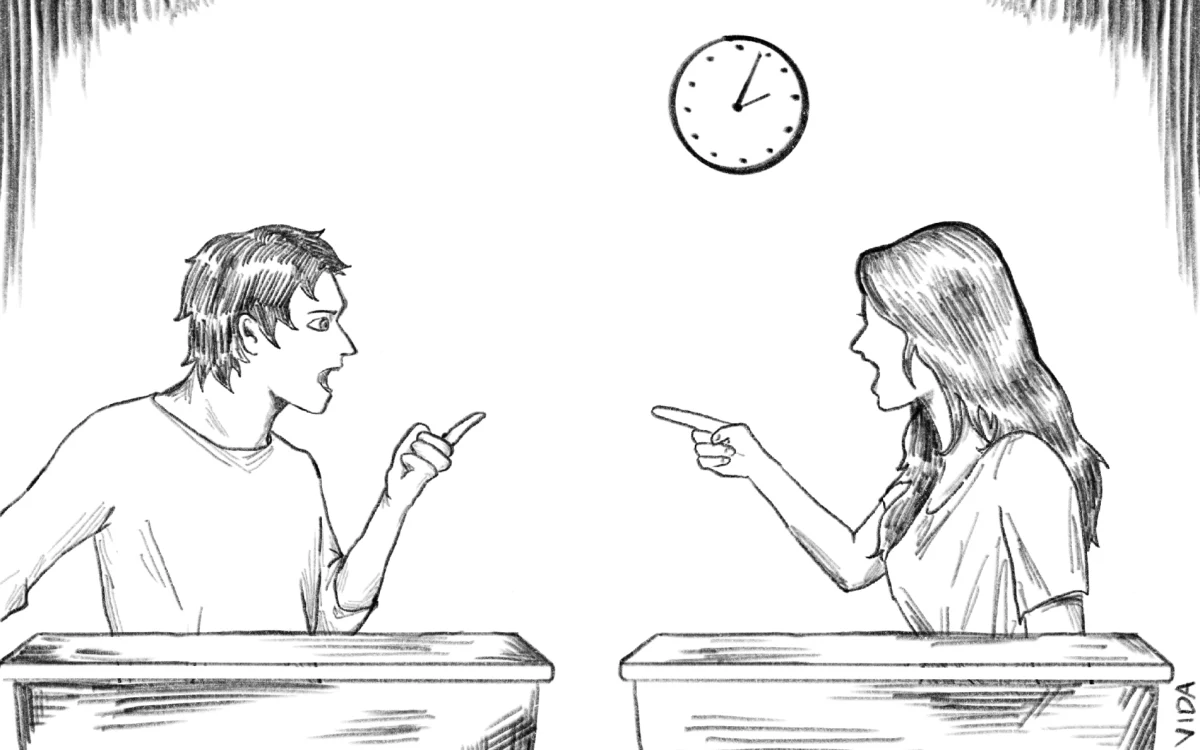
Donald Trump is the epitome of perpetual dissatisfaction. Son of a billionaire, handed a fortune, regarded as an incredible businessman, playboy and hyper-fixation of the American psyche, and the president of the United States, and it has never been enough for Donald Trump. Trump’s ineffable quest for more roots from a deeply traumatic childhood of emotional neglect, and in his search for the love he never had, he has epitomized the flaw in the American psyche that necessitates a pursuit of more.
Trump’s flamboyant behavior derives from a negligent childhood. Niece of Trump and accredited clinical psychologist, Mary Trump, described in her book, Too Much and Never Enough: How My Family Created the World’s Most Dangerous Man, “Having his father fail not only to meet his needs but to make him feel safe or loved, valued or mirrored, Donald suffered deprivations that would scar him for life.” Medical issues left his mother unable to care for Trump, leaving him “abandoned by his mother for at least a year.” Mary Trump explained, “Without warning, his needs weren’t being met, and his fears and longings went unsoothed.” She continued: “The same little boy who is desperately worried that he… is inadequate and that he will be destroyed for his inadequacy.”
In Abraham Maslow’s commonly cited and accepted, 1943 Maslow’s Hierarchy of Needs, he tiered needs in order of growth in the order of: psychological needs, safety needs, love and belonging, esteem, and self-actualization. With Trump’s “fears and longings… [going] unsoothed” and missing a primary caretaker, some of his safety needs were unmet. His father’s absence alongside his father’s inability “to make him feel safe or loved” clearly indicates his love and belonging needs were not met. Stuck at the second and third levels, he never emotionally progressed to esteem and self-actualization. Developing from a deficit, Trump has constantly searched for safety, love, and belonging from the validation of those around him, which has led to rash and flamboyant behavior.
His appearance on The Apprentice and subsequent ascendence into the public eye led to a glamorous and stylish public persona of a powerful businessman and playboy. Describing The Apprentice, Karen Valby, a frequent contributor in Vanity Fair described the public’s view of Trump, “As an audience, we were seduced by his mean-spirited catchphrase and illusion of authority.” The catchphrase she speaks of, is his infamous “You’re fired!” line. Through this phrase and powerful position on the show, Trump searched for a sense of safety in having power over others through his “You’re fired!” line. He scoured for public approval through his attempted seduction of the public and “illusion of authority.” Still, wanting to complete a transcendence of idealization in the public eye, he entered the world of sex and romantics. In March 1990, Trump was featured on the front cover of Playboy. Still, not enough within this field and pursuing further love and power, he had an extramarital affair with pornstar Stormy Daniels.
In pursuit of the world’s most powerful job and a sense of flamboyant vindication, Trump ran for president. Following a denial from a second term in 2020, Trump claimed fraud. He did so to test if he was loved to his satisfaction. During his speech on January 6, he stated “I want to thank you for the extraordinary love. That’s what it is. There’s never been a movement like this, ever, ever. For the extraordinary love for this amazing country, and this amazing movement, thank you,” while the crowd chanted “We love Trump.” He continued, stating “I could go on and on about this fraud that took place in every state, and all of these legislatures want this back. I don’t want to do it to you because I love you and it’s freezing out here. But I could just go on forever. I can tell you this,” the crowd behind chanted again: “We love you.” He pleads for love and belonging when he very publicly lost a competition for Love and Belonging. He thanks them for “extraordinary love,” stating that there has never been anything like it “ever.” His claims of fraud represent a refutation of people’s disillusion. He speaks simultaneously about fraud and love because they are equal to him.
As we saw later on Jan. 6 people were willing to overthrow a government to display love for Trump. 1,575 people stormed the capital to fulfill Trump’s sense of love and belonging; it was not enough. He continued his false claims about the election, riled hatred in the coming years, and ran again for president in pursuit of more love.
It may never be enough for Trump. He represents a man searching for love and belonging but has never found sufficient amounts. Trump is a harbinger, an exhortation for our own lives: Find solace, find joy, and find sufficiency in what is there. If we do not find joy, solace, and sufficiency in our lives, we risk living like Trump, continuously pursuing what will never come.


![Graphic Artist Wolstencroft shared about her process making this graphic: “I used an app called Procreate. The first thing I did was manually remove the background from all of the [movie] posters [featured in this article]. Then I decided which color scheme I liked best...and I used gradient maps to get the colors to be uniform. I [also] added some extra shading and a background, and it was done.”](https://www.blakespectrum.org/wp-content/uploads/2026/05/0-1200x834.png)