From its conception, America was the land of dichotomy. However, in the nation’s birth was the hope of a uniquely American ideal: We, of different backgrounds, races, and countries, could live, bright, broken, and beautiful, together. We have progressed and slipped as a national body. However, today, we risk a slip from which we cannot recover.
Recently, the Trump Administration has ruled on an agenda of hate and fear, using ICE to invoke fear through reckless tactics, resulting in Renee Good’s death on Jan. 7 and Alex Pretti’s death on Jan. 24. They have deployed tear gas and plastic bullets as a fear tactic. Trump’s administration has smeared Pretti’s and Good’s names, calling them “domestic terrorists.” Minneapolis has become less a city than a symbol in Trump’s fear and hate campaign. Hate and fear create perceived threat. As Donald Campbell theorized in his development of Realistic Conflict Theory and as many have since demonstrated, perceived threat creates stronger but more polarized political units.
Polarization through perceived threat is tearing us apart. Our national body is dying. In any glimmer of hopeful survival, we must turn to our one true American edict: compassion. We are the intertwining cells of the national body: all so delightfully different with a universal nucleus deep inside. To reunite this body, we must disarm people’s polarized perceived threat with unbridled empathy.
We must pursue what we can never be but are compelled to become: the beautiful, diverse, contradictory country in which humanity serves as our sole means of unity. Unity begins with understanding the nucleus inside of everyone: we love, suffer, and pursue happiness.
The abstraction is undeniably large. However, movements have always and will always begin with ordinary people in ordinary interaction. Absent individual agents of everyday movements, change stalls. As a small part of a grander task, we, in school, must be the ordinary instigators of change.
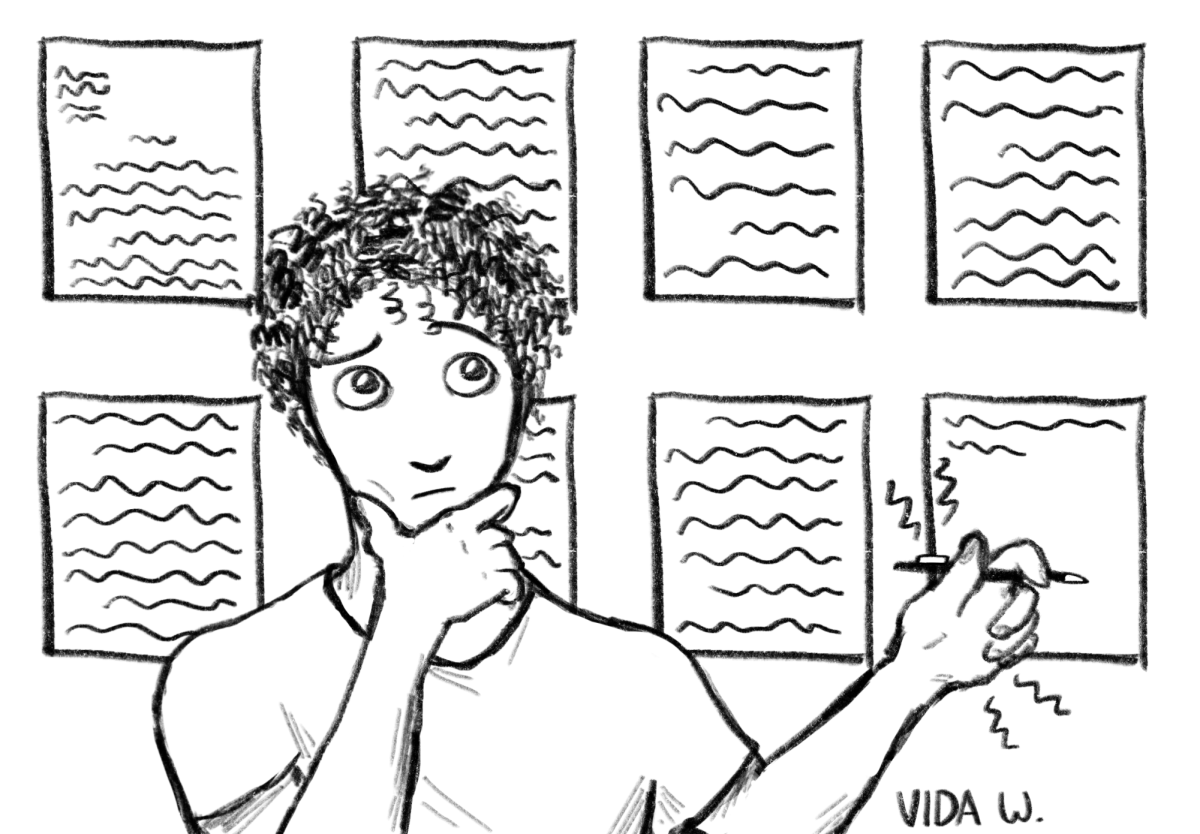
At our school, in-class discussions and hallway conversations begin with division and tribalism. To reverse our course of desecration, we must start with the previously mentioned equal assumption of what we all share: human love, suffering, and the pursuit of happiness. The Nov. 19 Poll with 197 respondents showed 28% of students feel uncomfortable sharing their own political opinions. One student stated, “Regardless of how strongly I believe in my viewpoints, sometimes it’s better socially to keep quiet,” indicating a shunning of idea exchange and a lack of understanding, precisely what is killing us.
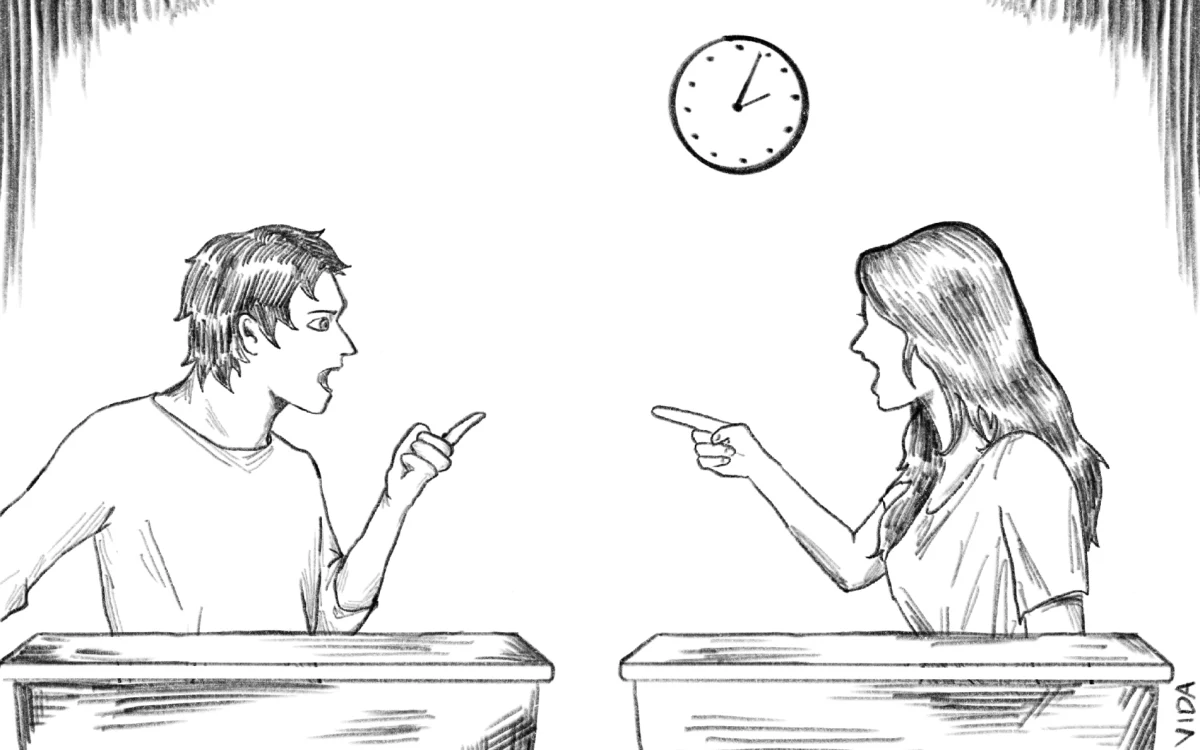
Many at the school believe opposing views deserve to be silenced. It can be tempting and easier to think so, as we can then progress through life unopposed, living in a false harmony. However, silence and censorship stagnate the exchange of ideas and prevent the sharing of experiences. As more people grow silent, scared, and resentful of speaking, Campbell’s Realistic Conflict Theory takes hold, causing vilification and polarization, no better than Trump’s hate and fear tactics. As vilification continues, only fear and hate precipitate, ripping apart our local community.
Instead of destroying, we must build. To build, we must establish empathy. When we hear spoken words from classmates, we must acknowledge that their truth is born of their contradictory, beautiful lives, different sufferings, loves, and happinesses, leading them to different conclusions. Rebuilding bridges, one link at a time, can help address our polarization at a local level.
When others’ conclusions amount to disrespect, hate, and fear, it is difficult. However, we must find a point of connection. We must find the little nucleus in them with the same DNA as us. Find the little human suffering, love, or happiness that resonates the same. The road to human connection is fraught. There will be failures along the way; there always have. The moment we return and attempt to build again, one alongside another, is the moment that lights the American ideal. If our national body is to survive, we must return, again and again.


![Graphic Artist Wolstencroft shared about her process making this graphic: “I used an app called Procreate. The first thing I did was manually remove the background from all of the [movie] posters [featured in this article]. Then I decided which color scheme I liked best...and I used gradient maps to get the colors to be uniform. I [also] added some extra shading and a background, and it was done.”](https://www.blakespectrum.org/wp-content/uploads/2026/05/0-1200x834.png)